Korean plastic surgery has become a globally recognized industry, and the number of foreigners visiting Korea for cosmetic procedures continues to grow every year. Among the many questions asked, one of the most common is:
“Can I get plastic surgery in Korea even if I don’t speak Korean?”
This question reflects concerns not only about language barriers but also about whether the process is manageable, safe, and practical. Fortunately, the Korean plastic surgery system is already well‑structured for international patients, and not speaking Korean rarely becomes an obstacle. Below is a detailed explanation of why the language barrier is not a major issue, how the actual process works, and how communication is handled throughout treatment.
1. Why You Can Get Plastic Surgery in Korea Without Speaking Korean
1) Multilingual consultation systems are already established
Korean plastic surgery clinics—especially in Gangnam, Apgujeong, and Cheongdam—receive a large number of foreign patients.
Most clinics offer consultations in multiple languages such as:
- English
- Chinese (Simplified/Traditional)
- Japanese
- Russian
- Arabic
These languages are supported because demand is high.
Even without Korean, patients can communicate smoothly.
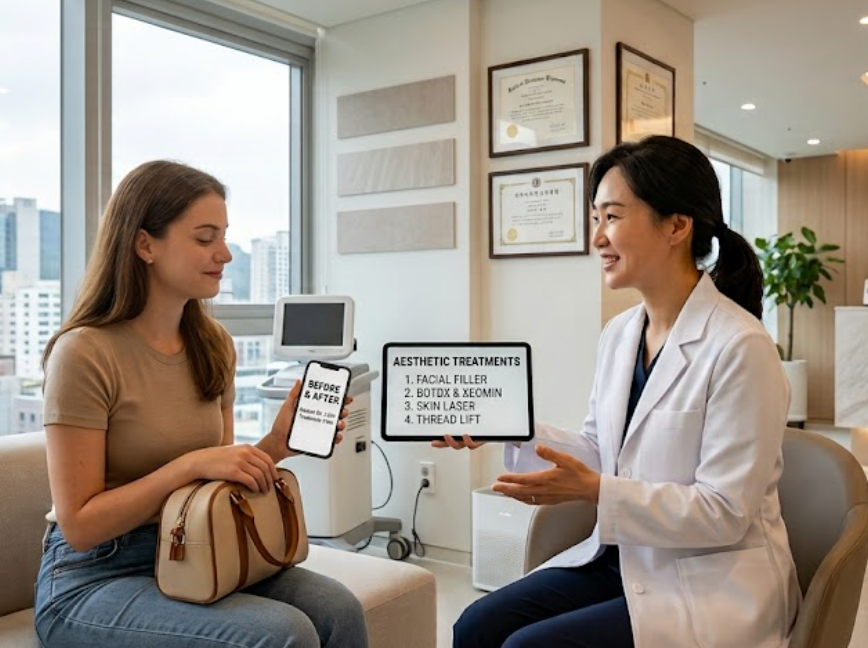
2) Many clinics have professional interpreters on staff
Clinics that frequently treat foreign patients employ dedicated coordinators who provide interpretation throughout the entire process:
- Consultation
- Scheduling
- Pre‑operative instructions
- Surgery day guidance
- Post‑operative care
- Medication instructions
- Follow‑up appointments
- Aftercare guidance for returning home
This ensures that patients who do not speak Korean can proceed without difficulty.
3) Surgeons have extensive experience with international patients
Korean surgeons treat a large number of foreign patients, especially in procedures such as rhinoplasty, blepharoplasty, facial contouring, lifting, and breast surgery.
Many surgeons can communicate in English, and even when interpretation is used, they are familiar with foreign facial structures, cultural beauty standards, and anatomical differences.
4) Foreign‑friendly reservation systems
Most clinics provide reservation channels specifically for foreigners:
- Line
- KakaoTalk
- Dedicated international patient pages
Patients can send photos and receive consultation without speaking Korean.
5) The entire process is standardized for foreign patients
Because foreign patient volume is high, clinics have already standardized the entire workflow:
- Online consultation
- Price quotation
- Scheduling
- Pre‑operative tests
- Surgery
- Recovery
- Follow‑up
- Aftercare instructions
This structure minimizes language‑related issues.
2. How the Actual Process Works Without Korean
1) Online consultation
Foreign patients typically begin with online consultation.
They send photos and describe their concerns, and coordinators reply in English or another supported language.
2) Quotation and scheduling
Patients receive information such as:
- Estimated cost
- Recovery timeline
- Recommended length of stay in Korea
- Available surgery dates
- Required tests
- Post‑operative precautions
3) In‑person consultation in Korea
Upon arrival, patients meet the surgeon with an interpreter present.
Design, expectations, and surgical plans are explained clearly.
4) Surgery day
Interpreters assist with:
- Consent forms
- Pre‑operative instructions
- Post‑operative guidance
- Medication explanations
5) Recovery and follow‑up
Patients receive detailed instructions in English or their preferred language:
- Swelling management
- Cold/heat compress timing
- Stitch removal schedule
- Follow‑up visits
- Aftercare for returning home
3. When Language Barriers Might Cause Issues
Although rare, language barriers may matter in certain cases:
1) Small clinics or clinics outside major cities
These may not offer multilingual support.
2) Highly complex revision surgeries
Accurate communication becomes more important.
3) Patients who speak neither Korean nor English
Language options may be limited depending on the clinic.
4. Advantages of Getting Surgery Without Speaking Korean
- Clinics are very friendly and structured for foreign patients
- Interpreters guide every step
- Systems are designed specifically for international cases
5. Disadvantages
- Direct communication with the surgeon may feel limited
- Interpretation accuracy can affect consultation quality
- Emergency situations outside the clinic may be inconvenient
6. Conclusion
Korean plastic surgery clinics are fully equipped to treat patients who do not speak Korean.
With multilingual consultations, professional interpreters, standardized systems, and surgeons experienced with international patients, language barriers rarely interfere with treatment.
Not speaking Korean is one of the easiest obstacles to overcome in Korean plastic surgery.
⭐ Short Q&A
Q1. Can I get a consultation without Korean?
A. Yes. Most clinics offer English consultations and have interpreters.
Q2. Is there an interpreter on surgery day?
A. Yes. They assist with all instructions and explanations.
Q3. Will language be a problem during recovery?
A. No. All aftercare instructions are provided in English.
Q4. How do I make a reservation?
A. Through WhatsApp, email, or other messaging apps.
Q5. Does limited communication affect results?
A. Usually no. Surgeons are very experienced with foreign patients.
⭐ Recommended Articles