How Korean Facelift Techniques Solve Post‑Contouring Sagging**
Hello, this is Kidarri Plastic Surgery.
Many patients wonder why sagging occurs after facial contouring procedures such as zygoma reduction, jawline contouring, or chin reduction—and more importantly, how to fix it.
Sagging after contouring surgery is not a simple complication.
It is an inevitable anatomical consequence caused by structural changes in the bone, ligaments, and soft tissues.
Understanding the exact cause is essential for choosing the correct treatment.
Key Summary
- Contouring surgery reduces bone volume and weakens retaining ligaments, causing sagging.
- Sagging occurs because multiple layers—periosteum, deep fat, SMAS—descend together.
- The correct solution is Endotine midface lift + SMAS facelift, applied according to each patient’s condition.
Why Sagging Occurs After Contouring Surgery
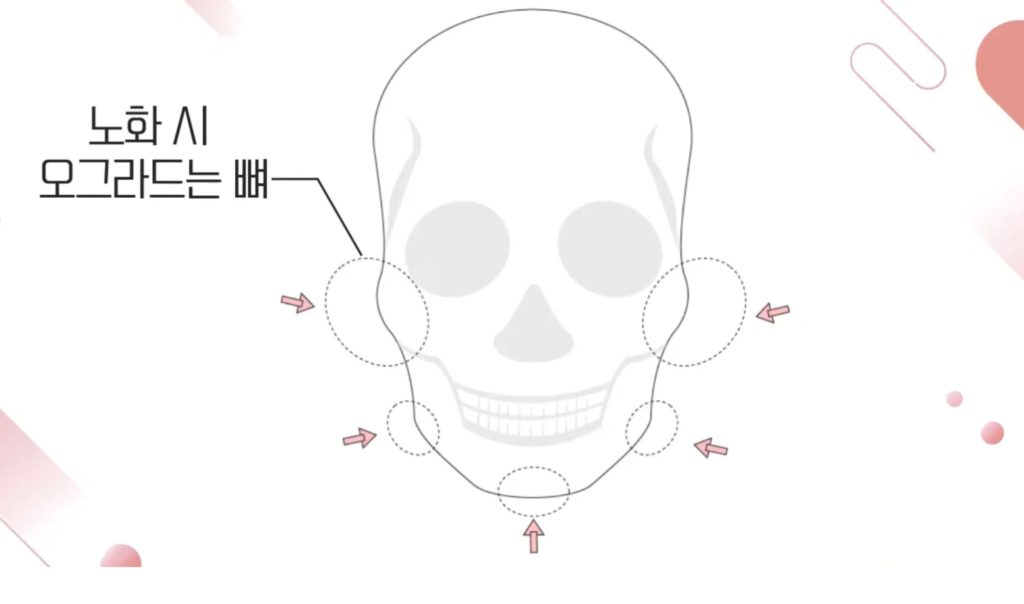
✔ 1) Bone becomes smaller → soft tissue loses support
As we age, facial bones shrink and recede, causing sagging.
Zygoma reduction creates the same structural change:
- Bone is pushed inward
- The overlying soft tissues lose their foundation
- Fat, muscle, and skin begin to descend
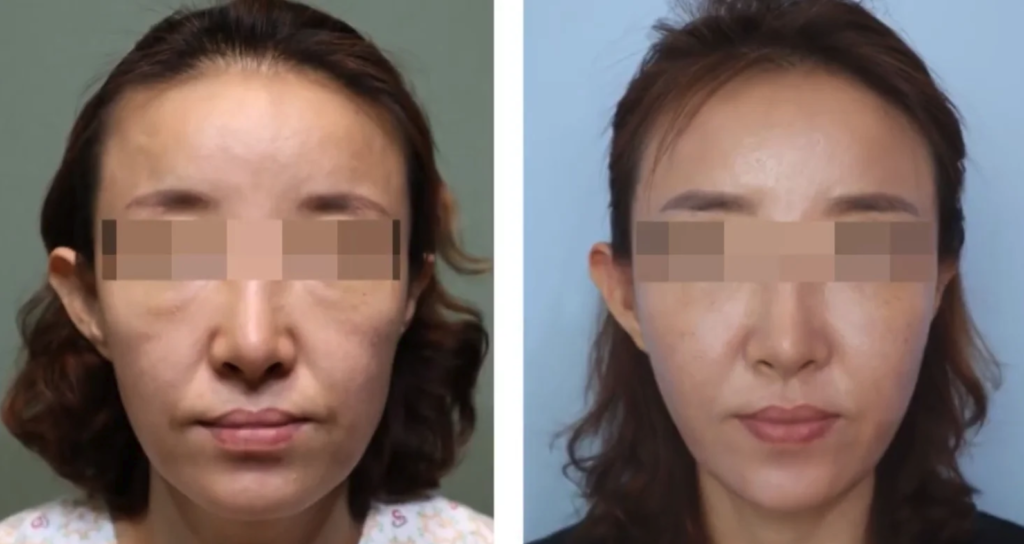
In other words:
Bone reduction → loss of support → inevitable sagging
✔ 2) Retaining ligaments become weakened or detached
The face is held together by multiple retaining ligaments, including the zygomatic retaining ligament.
These ligaments connect:
Bone → Periosteum → Deep fat → SMAS → Skin
During contouring surgery:
- Ligaments are released
- Bone is cut
- Periosteum is dissected
This causes the entire soft‑tissue unit to drop downward.
Therefore, post‑contouring sagging is almost unavoidable.
Sagging Occurs Across Multiple Facial Layers
The face is composed of:

- Skin
- Subcutaneous fat
- SMAS fascia
- Deep fat compartments
- Mimetic muscles
- Periosteum
- Bone
Sagging after contouring is a multi‑layer collapse, not a single‑layer issue.
✔ Periosteum descends → deep fat (deep medial cheek fat) sags
✔ Ligaments weaken → SMAS layer sags
✔ SMAS sags → skin sags together
This is why contouring‑related sagging is complex and must be treated structurally.
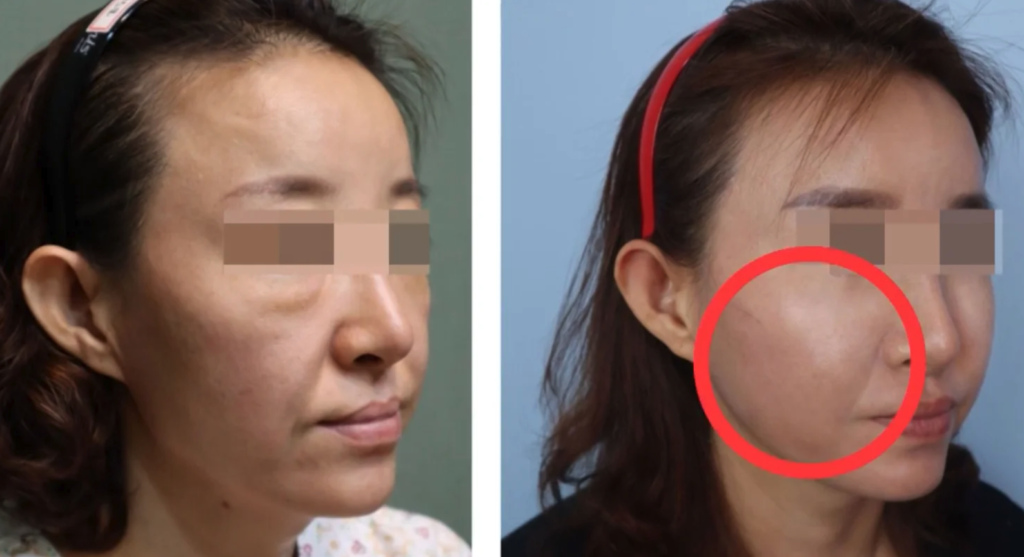
Two Main Types of Sagging
① Periosteal + deep fat sagging
- Bone becomes smaller
- Periosteum shifts downward
- Deep fat drops
- Nasolabial folds and “Indian lines” deepen
② SMAS sagging due to weakened ligaments
- Common in patients with previous fat grafts
- Ligaments stretch
- SMAS descends
- Skin becomes heavy and droopy
Most patients experience both types simultaneously.
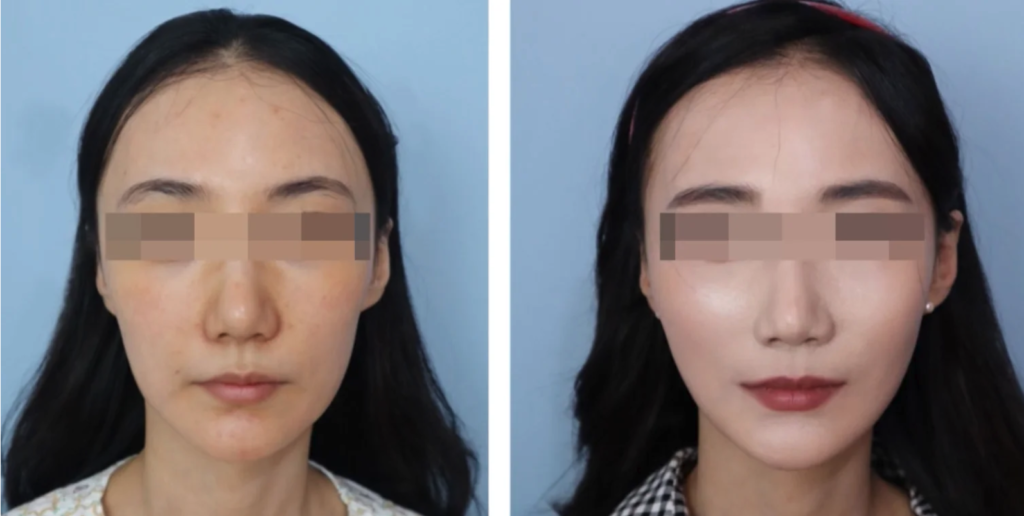
Why Endotine Alone Sometimes Fails
Endotine is excellent for periosteal lifting.
So it works well for:
- Deep fat sagging
- Periosteal descent
- Midface volume loss
However, if the SMAS layer has significantly descended:
- Lifting only the periosteum does not lift the skin
- The surface layer remains droopy
- Only half the problem is solved
Therefore:
- Periosteal sagging → Endotine midface lift
- SMAS sagging → SMAS facelift
Doing only one results in partial correction.
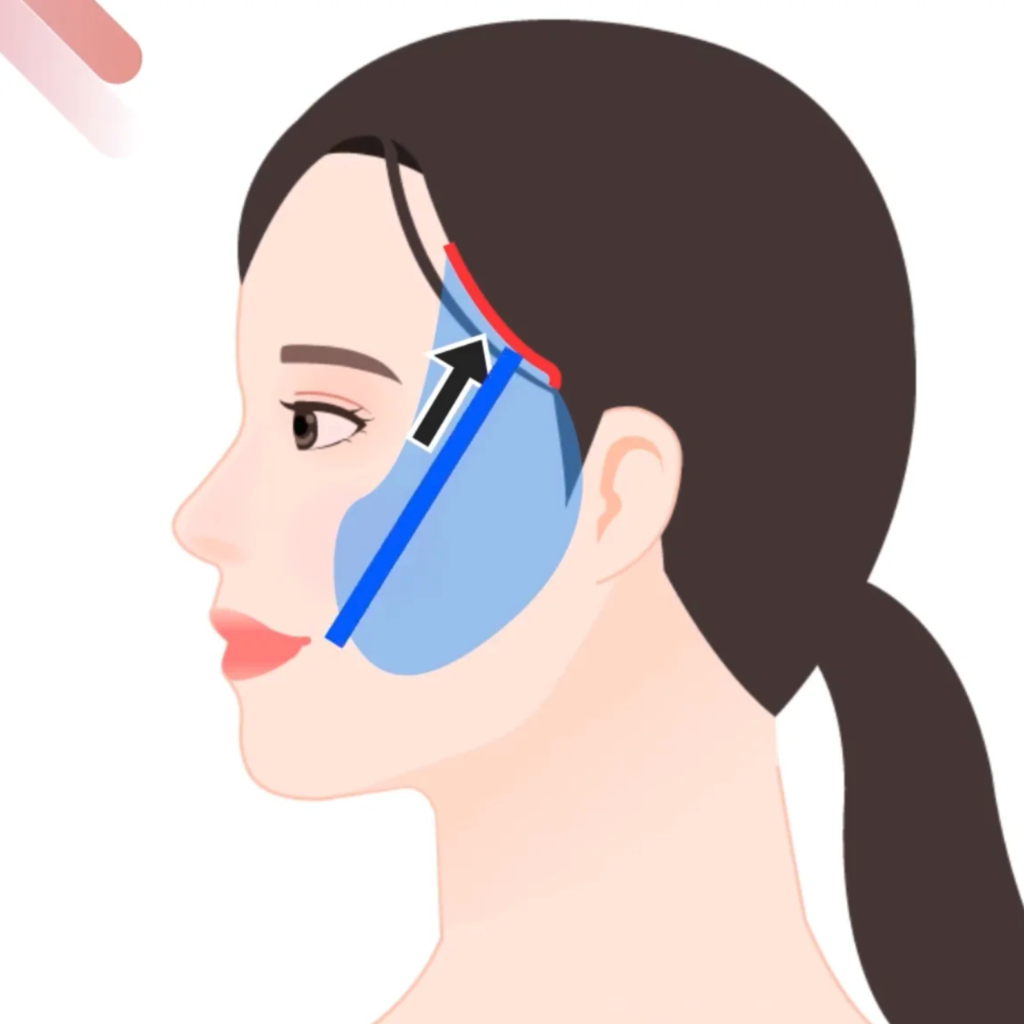
Correct Solution: Lift Both Layers Together
✔ Periosteum → Endotine midface lift
✔ SMAS → SMAS facelift
Lifting both layers simultaneously provides:
- Midface volume restoration
- Improvement of nasolabial folds
- Correction of Indian lines
- Upturned mouth corners
- Cheek sagging correction
- Full facial rejuvenation
This dual‑layer approach is the most effective method for post‑contouring sagging.
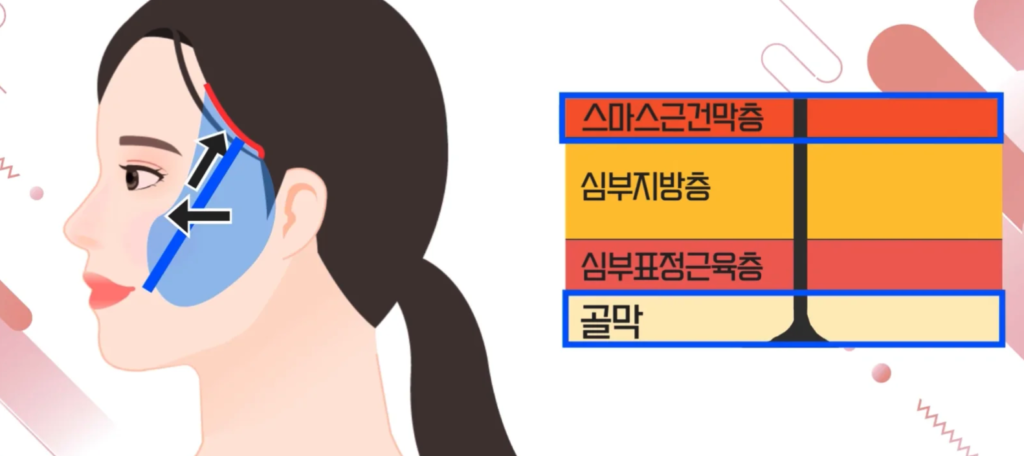
Korean Facelift Technique: One Incision, Three Procedures
Through a single temporal incision, Korean surgeons can perform:
- SMAS temporal lift
- Subperiosteal dissection + Endotine midface lift
- Zygoma reduction (if needed)
This creates a powerful synergy:
- Overlapping dissection planes
- Faster recovery
- Minimal scarring
- Strong lifting power
- Best correction for contouring‑related sagging
Sagging after contouring is not bad luck.
It is an anatomical consequence of bone reduction and ligament weakening.
To fix it properly:
- Lift the periosteum with Endotine
- Lift the SMAS with facelift
- Correct both layers at the same time
Kidarri Plastic Surgery specializes in dual‑layer lifting for contouring‑related sagging, providing natural and long‑lasting results.
🔗 Recommended Articles
🔗 Kidarri Plastic Surgery Official Website
🎥 Kidarri Plastic Surgery Official YouTube Channel
👉 https://youtube.com/channel/UC8n-YGd3wJaahGeESfi8ldA?si=CTFZCBqkaz4KZAAp
📢 Kidarri Plastic Surgery Official Notice
✔ This content is intended for general medical information only.
Accurate diagnosis and treatment plans must be determined through consultation with a qualified specialist.
✔ All surgical and non‑surgical procedures may involve potential side effects such as swelling, bruising, bleeding, infection, scarring, asymmetry, or the possibility of revision surgery, depending on the individual.